
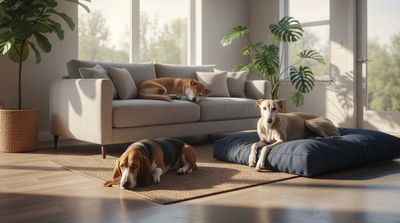
You work full-time. You leave in the morning and come back 8 hours later. And you ask yourself: can I even have a dog in a situation like this?
The answer is: yes. As long as you pick the right breed and prepare your dog properly. Some dogs, once they're properly prepared, can calmly stay home alone for a few hours - without heavy stress, persistent howling, or wrecking the place.
This article is the flip side of the coin. If you read our ranking of the 10 breeds most prone to separation anxiety, you already know which dogs take being apart hard. Now for the good news - the breeds that usually tolerate a predictable, few-hour absence better.
Are there really dogs that like being alone?
Let's be honest: no dog "likes" being alone. Dogs are pack animals, wired to live in a group. Even the most independent dog would rather have your company than an empty home.
But there's a difference between "I'd rather be with you" and "I can't live without you."
Some breeds developed traits that let them calmly tolerate being alone:
- Independence - bred to work on their own (guarding, hunting without human contact), they don't need constant interaction
- Low energy - dogs that naturally sleep a lot simply sleep through your absence
- Low tendency toward anxiety - confident, calm, unfazed by changes in their surroundings
- Moderate attachment - they love you, but they don't "cling" to you around the clock
It's an important distinction. We're not looking for a dog that doesn't need people. We're looking for a dog that can calmly wait for you to come back.
What to look for when choosing a breed
Before we get to the ranking, a few things worth weighing up:
Level of independence
Breeds bred to work on their own - guarding dogs, earth dogs that hunt in burrows, spitz breeds - usually handle being alone better than companion or herding breeds, which need constant human contact.
Energy needs
A dog with low exercise needs simply sleeps through most of the day. A dog with high exercise needs, shut in four walls for 8 hours, will look for an outlet for their frustration - and usually finds it in your shoes or your couch.
Tendency toward anxiety
Some breeds show a more frequently observed tendency toward separation-related behaviors. Others are quite the opposite. Confident, calm breeds with a stable temperament are a better choice for people who leave the house often.
Size vs. living space
This may come as a surprise, but a dog's size doesn't always match their need for space. The Greyhound - one of the largest dogs on this list - often settles in well in an apartment, because they sleep most of the day. Meanwhile a small but energetic Jack Russell can tear the place apart.
15 dog breeds that handle being alone best
The order on this list reflects each breed's general tendency to handle being alone calmly, but it's not a rigid ranking. Every dog is an individual - how well they cope on their own comes down to temperament, past experiences, health, and how they were prepared.
1. Basenji
The Basenji is one of the oldest breeds in the world, originating in Central Africa. Nicknamed "the dog that doesn't bark" (they make a distinctive sound called a yodel), they're remarkably independent and self-sufficient.
Bred for thousands of years as a solo hunter, the Basenji learned to rely first and foremost on themselves. They're a dog that loves their people, but doesn't need them around all the time to feel safe.
Basenji - breed card
- Maximum time without you: 6-8 hours
- Key trait: Innate independence, a "cat-like" character
- Tip: Provide puzzle toys - the Basenji is smart and needs mental stimulation, even when they're alone
2. Shar Pei
The Shar Pei is an ancient Chinese breed, originally bred as a guard and fighting dog. Their independent, somewhat aloof character means they often handle being alone well. The Shar Pei is loyal to their family, but usually isn't "clingy" - they can lie calmly in their corner without demanding constant attention.
Shar Pei - breed card
- Maximum time without you: 6-8 hours
- Key trait: Natural aloofness, a guard dog's independence
- Tip: The Shar Pei doesn't need intense play - but they will appreciate a calm walk and time with you when you get back
3. Chow Chow
The Chow Chow is a breed that's often compared to a cat. And there's a lot of truth to that. This fluffy giant from China is considered one of the most independent breeds. The Chow Chow forms a strong bond with one person, but doesn't show it in a pushy way. They can often rest calmly for long stretches without demanding constant interaction.
Their history as a guard and all-purpose dog in China shaped a character that values self-reliance over company.
Chow Chow - breed card
- Maximum time without you: 6-8 hours
- Key trait: A "cat-like" temperament, inner calm
- Tip: The Chow Chow needs early socialization - a well-socialized dog is confident and calm home alone
4. Akita
The Akita is a Japanese dog with a strong character and a clear sense of dignity. Originally bred to hunt bears and to guard, the Akita is self-sufficient and composed. They usually don't demand constant reassurance - your calm presence is enough.
The Akita is a breed that forms a strong bond, but also needs their own space. They're a dog that's delighted when you come back, but usually takes your leaving in stride.
Akita - breed card
- Maximum time without you: 6-8 hours
- Key trait: Confidence, dignity, inner strength
- Tip: The Akita needs an experienced owner - their independence is an asset, but it calls for consistent training
5. Shiba Inu
The Shiba Inu is a "mini Akita" - at least when it comes to character. This popular Japanese dog is known for their independent, somewhat stubborn disposition. The Shiba loves on their own terms. They come for cuddles when they want to, and spend the rest of the time watching the world from a distance.
That innate independence means the Shiba Inu is sometimes chosen by people who work away from home. With the right preparation, they can handle a few-hour absence more calmly.
Shiba Inu - breed card
- Maximum time without you: 6-8 hours
- Key trait: Independence, a "cat in a dog's body"
- Tip: Dog-proof your home - the Shiba is independent but also clever. A bored one can find creative ways to entertain themselves
6. Greyhound
This may be the biggest surprise on the list. The Greyhound - a racing dog, a symbol of speed - is surprisingly calm and sleep-loving at home. After a short, intense run, the Greyhound is ready to sleep the rest of the day. And that's literal - these dogs can sleep 16-18 hours a day.
Retired racing Greyhounds are an especially good choice. Used to spending time in kennels, they can often rest calmly for long stretches. They're gentle, quiet, and usually adapt well to a calm daily rhythm.
Greyhound - breed card
- Maximum time without you: 6-8 hours
- Key trait: Champion couch potato, calm
- Tip: Provide a comfy bed - the Greyhound has very little body fat and needs a soft place to rest
7. Whippet
The Whippet is a smaller version of the Greyhound. They have all of the sighthound's virtues - calm, gentleness, a love of sleep - in a smaller package that fits apartment life better. Whippets are sometimes called "couch potatoes" - after a morning walk they happily curl up and sleep through the rest of the day.
They're also quieter than most breeds - they rarely bark, which your neighbors will appreciate.
Whippet - breed card
- Maximum time without you: 6-8 hours
- Key trait: A home-loving couch potato, quiet and calm
- Tip: Whippets can be sensitive to cold - leave a blanket and make sure the home stays warm
8. English Bulldog
The English Bulldog is regarded as one of the calmer breeds. This compact, muscular dog has some of the lowest exercise needs among popular breeds. A short walk, a bowl of food, and a comfy bed - that's often all they need to be content at home.
Their easygoing character means they often handle being alone well. They usually don't have much need to move around indoors and, with the right preparation, can take your absence more calmly. Most of the time they simply sleep - in exactly the same spot where you left them.
English Bulldog - breed card
- Maximum time without you: 6-8 hours
- Key trait: Easygoing nature, low activity needs
- Tip: Watch the temperature - Bulldogs don't handle heat well. In summer, leave the AC or a fan on
9. Basset Hound
The Basset Hound, with their trademark long ears and mournful gaze, is a dog that looks like they're tired all the time. And in a way, they are - Bassets are one of the calmest breeds, spending most of the day napping.
Bred to trail game on their own, Bassets have an innate ability to work without constant commands. That self-reliance translates into greater tolerance for predictable absences.
Basset Hound - breed card
- Maximum time without you: 6-8 hours
- Key trait: Natural calm, a love of sleep
- Tip: The Basset Hound has a tendency to howl - it's worth working on this from puppyhood, especially if you live in an apartment building
10. Chihuahua
The Chihuahua has a reputation for being a nervous, yappy little dog. And in many cases that's true - but a well-socialized Chihuahua is a completely different story. The smallest breed in the world can sleep 14-16 hours a day, which means they can settle in better with a working owner, as long as they've been well prepared for time alone.
The Chihuahua also adapts easily. They bond strongly with their owner, but with gradual acclimation from puppyhood they usually handle shorter absences calmly.
Chihuahua - breed card
- Maximum time without you: 5-7 hours
- Key trait: Adaptability, lots of sleep
- Tip: Early socialization is key - an under-socialized Chihuahua can develop fearfulness and excessive barking
11. Miniature Schnauzer
The Miniature Schnauzer is a dog with a stable, balanced temperament. They're confident but not pushy. They enjoy company but don't fall apart when left alone. They're a breed that combines a steady temperament with a good ability to learn.
Miniature Schnauzers were bred as farm watchdogs - which means they knew how to work on their own, keeping an eye on the property without the owner overseeing them.
Miniature Schnauzer - breed card
- Maximum time without you: 6-8 hours
- Key trait: A stable temperament, confidence
- Tip: Provide chew toys - Schnauzers have a strong need to chew, which channels their energy well
12. French Bulldog
The French Bulldog is a breed that won over city dwellers - and for good reason. They're small, quiet, low on exercise needs, and adapt easily to apartment life. After a morning walk they happily nap for a few hours.
The French Bulldog is more sociable than their English cousin, but they can tolerate a moderately long absence well. The key is routine - a dog that knows you always come back stresses less about you leaving.
French Bulldog - breed card
- Maximum time without you: 4-6 hours
- Key trait: Easily adapts to city life, calm disposition
- Tip: Just like the English Bulldog - watch the temperature. A short nose means trouble regulating body heat
13. Boston Terrier
The Boston Terrier, known as the "American Gentleman," is a dog with a balanced temperament and natural elegance. They're cheerful and sociable, but they can also lie calmly on their own. They're a breed with moderate needs across the board - activity, attention, space.
The Boston Terrier is neither hyperactive nor overly attached. They're a breed with a fairly balanced profile among companion dogs.
Boston Terrier - breed card
- Maximum time without you: 4-6 hours
- Key trait: Balanced temperament, moderation
- Tip: The Boston Terrier learns quickly - use that to train them to stay home calmly
14. Lhasa Apso
The Lhasa Apso is an ancient Tibetan breed, bred as a watchdog in Buddhist monasteries. For centuries, dogs of this breed stood guard inside buildings, which fostered patience and self-reliance. They're a dog that can rest calmly and watch their surroundings without constant interaction.
The Lhasa Apso has a strong, independent character - they resemble a watchdog more than a companion breed, despite their small size. They aren't "clingy" and don't follow you from room to room.
Lhasa Apso - breed card
- Maximum time without you: 6-8 hours
- Key trait: A watchdog's instinct, patience
- Tip: The Lhasa Apso can be territorial - early socialization will help them stay calm when they're alone and hear sounds from outside the door
15. Miniature Pinscher
The Miniature Pinscher is a small dog with plenty of confidence. Bold and self-reliant, they can tolerate shorter absences better because they treat the home as their territory to guard. A natural watchdog instinct means they often focus on keeping an eye on their surroundings.
The Miniature Pinscher is energetic on walks, but at home they can be surprisingly calm - especially after a good dose of exercise.
Miniature Pinscher - breed card
- Maximum time without you: 5-7 hours
- Key trait: Confidence, a watchdog instinct
- Tip: Escape-proof your home - the Miniature Pinscher is small but very inventive at finding ways out
See how your dog does on their own
Whatever the breed, it helps to know what's really going on at home while you're away. Merdilo listens for the sounds your dog makes and lets you know when signs of distress show up.
Breed comparison - table
Below you'll find all 15 breeds side by side with the key details to help you decide. Keep in mind that how long a dog can be left alone depends on many factors - the values given are a rough range for an adult, healthy, well-prepared dog. Every dog is an individual - temperament, past experiences, health, and the current situation at home can shift these numbers significantly in either direction.
| Breed | Max. time alone | Independence level | Energy | Size |
|---|---|---|---|---|
| Basenji | 6-8 h | Very high | Moderate | Small-medium |
| Shar Pei | 6-8 h | Very high | Low | Medium |
| Chow Chow | 6-8 h | Very high | Low | Medium-large |
| Akita | 6-8 h | Very high | Moderate | Large |
| Shiba Inu | 6-8 h | Very high | Moderate | Small-medium |
| Greyhound | 6-8 h | High | Low (at home) | Large |
| Whippet | 6-8 h | High | Low (at home) | Medium |
| English Bulldog | 6-8 h | Moderate | Very low | Medium |
| Basset Hound | 6-8 h | Moderate | Low | Medium |
| Chihuahua | 5-7 h | Moderate | Low | Very small |
| Miniature Schnauzer | 6-8 h | High | Moderate | Small |
| French Bulldog | 4-6 h | Moderate | Low | Small-medium |
| Boston Terrier | 4-6 h | Moderate | Moderate | Small |
| Lhasa Apso | 6-8 h | High | Low | Small |
| Miniature Pinscher | 5-7 h | High | Moderate | Small |
Even an independent dog needs preparation
Picking a breed from this list is a good start, but it's no guarantee that your dog will calmly stay home alone for 8 hours right away. Even the most independent dog needs proper preparation.
Gradual acclimation
Don't leave for 8 hours on day one. Start with 15 minutes, then 30, then an hour. Increase the time away gradually, always coming back before your dog starts to get anxious. This process can take a few weeks, but it's an investment that pays off for years. You'll find the full step-by-step plan in our article on systematic desensitization.
Routine is the foundation
Dogs love predictability. Build a fixed routine: morning walk, leaving the house, coming back, evening walk. When your dog knows what to expect, they take your leaving more easily. It's also worth looking at exercise before you leave and your dog's daily rhythm - the right amount of tiredness and regular sleep support calm time at home.
Mental stimulation
Leave your dog something to do: food-stuffed toys (like a KONG), snuffle mats, balls with hidden treats. A bored dog - even a naturally independent one - may start looking for entertainment on their own. And that rarely ends well for your furniture.
A safe space
Give your dog a set spot where they feel safe. That can be a crate (if your dog is used to it), a separate room, or simply a comfy bed in a quiet corner. What matters is that your dog associates that place with rest and a sense of safety.
Calm goodbyes and hellos
Don't make a drama out of leaving. Don't say goodbye for 10 minutes, don't apologize to your dog, don't say "Mommy will be right back" in a shaky voice. Leave calmly, as if it were the most natural thing in the world. When you come back, wait until your dog has settled before you greet them. That way your dog learns that your comings and goings are ordinary, not a special event. For more on how a dog reacts to the very sequence of getting ready, see our article on departure cues, and for the common pitfalls of alone-time training, our article on alone-time training mistakes.
When it's still worth consulting a behaviorist
Even choosing an "independent" breed and preparing carefully doesn't remove the risk that your dog will develop separation-related difficulties. Every dog is an individual - temperament, past experiences, health, and the current situation at home all shape how they cope with being alone.
It's worth considering a consultation with a veterinary behaviorist when you notice:
- Severe signs: self-injury (paws bleeding from scratching at the door, broken nails), long howling over 30 minutes, refusing food all day, trying to escape through a window or door.
- No progress after 6-8 weeks of consistent desensitization work, despite a properly run plan.
- Regression that keeps coming back: stepping back a phase worked once, but after a few weeks the problem returns.
Merdilo is a tool for observing - it doesn't replace a visit to a specialist, but concrete data from the app (the length of calm periods, the type of vocalization, the Calm Score over several weeks) can make a behaviorist's job easier. A bit like a thermometer: it shows a signal, but it doesn't diagnose the cause or treat it.
Summary
Working full-time doesn't rule out having a dog. But it does call for a conscious choice of breed and consistent preparation for time alone.
The most important rules:
- Choose a breed with an independent character - breeds from Asian guarding lines, sighthounds, and low-energy breeds are the best place to start
- Acclimate gradually - no dog should be left alone for 8 hours on day one
- Build a routine - predictability helps reduce anxiety
- Provide stimulation - a dog that's had enough activity and has something to do is more likely to rest calmly
- Keep watching - even independent breeds can have off days
And remember - breed is a predisposition, not a guarantee. Every dog is different. Even a Basenji may need extra support, and a shelter mix can turn out to be a master of independence.
What matters most is that you know your dog, listen to their signals, and give them the right conditions. And if you ever wonder what's going on at home while you're away - a dog monitoring app can give you more concrete information, and using your phone as a dog camera lets you start without buying any equipment.
Sources
- Salonen, M., Sulkama, S., Mikkola, S., et al. (2020). "Prevalence, comorbidity, and breed differences in canine anxiety in 13,700 Finnish pet dogs." Scientific Reports, 10, 2962.
- Serpell, J. A., & Hsu, Y. (2001). "Development and validation of a novel method for evaluating behavior and temperament in guide dogs." Applied Animal Behaviour Science, 72(4), 347-364.
- Kubinyi, E., Turcsán, B., & Miklósi, Á. (2009). "Dog and owner demographic characteristics and dog personality trait associations." Behavioural Processes, 81(3), 392-401.
- Flannigan, G., & Dodman, N. H. (2001). "Risk factors and behaviors associated with separation anxiety in dogs." Journal of the American Veterinary Medical Association, 219(4), 460-466.
- Svartberg, K. (2006). "Breed-typical behaviour in dogs - Historical remnants or recent constructs?" Applied Animal Behaviour Science, 96(3-4), 293-313.
This article is for informational purposes and does not replace a consultation with a vet or a behaviorist. Even breeds considered independent can develop separation anxiety under stress, trauma, or changes in their environment. If you notice concerning behavior in your dog, consult a specialist.
Read next
- Alone-time training - systematic desensitization step by step
- Departure cues - why your dog knows you're about to leave
- 7 most common mistakes in alone-time training
- Exercise before you leave - how to prepare your dog for your absence
- Calm Score - what the numbers in the Merdilo app mean
- 10 dog breeds most prone to separation anxiety
- How long can a dog be left alone? A table by age
- Separation anxiety in dogs - 8 signs and a step-by-step plan